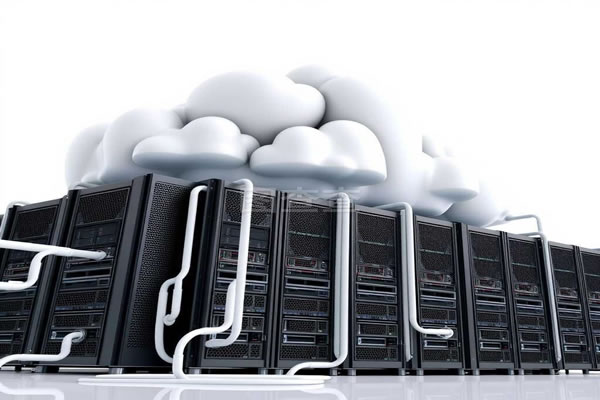
introduction: in the context of globalized business and growing cyber threats, it has become a common strategy for enterprises to choose us high-defense server rental. this article focuses on "how enterprises can flexibly choose us high-defense server rental and ensure business continuity", providing executable evaluation methods and design points to help decision-makers strike a balance between security and cost and ensure stable and available services.
understand the necessity of renting a high-defense server in the united states
for enterprises facing north american or global users, u.s. computer rooms have advantages in network latency, bandwidth resources, and legal environment. high-defense server rental is not only a basic means to deal with ddos attacks, but also a line of defense to improve customer experience and maintain brand reputation. understanding this necessity can help integrate security investments into overall business continuity planning rather than as an afterthought.
assess business continuity needs and risk tolerance
before deciding to rent, you should quantify the availability requirements, rto (recovery time objective) and rpo (recovery point objective) of key business processes, and assess the type and frequency of possible attacks. clarify the priorities of core systems through the risk matrix, determine which systems need to deploy high-defense capabilities, and which systems can use low-cost backup, so as to achieve targeted resource allocation.
choose a flexible rental model to achieve a balance between cost and flexibility
flexible leasing includes models such as on-demand billing, short-term trials, elastic bandwidth, and scalable instances. enterprises can first trial high-defense strategies on non-critical traffic and then gradually expand; while retaining rapid expansion and temporary protection capabilities to cope with sudden attacks or business peaks, they can save long-term costs and ensure temporary flexibility.
key technical indicators and specifications selection points
when selecting a server, pay attention to indicators such as peak bandwidth, cleaning capabilities, concurrent connections, network exits, and hardware configuration. bandwidth is not the only indicator. cleaning capabilities (traffic cleaning clarity and rate), protection levels (network layer, application layer) and available protocol support will directly affect the protection effect and business response speed.
design principles for network and ddos protection solutions
an effective protection solution should include multiple layers of defense: edge cleaning, traffic rate limiting, waf (application layer protection) and behavioral analysis. properly configure whitelists, blacklists, and threshold alarms, and combine traffic sampling and log analysis to identify early attacks and automatically trigger defense strategies, reducing manual intervention time.
redundancy and disaster recovery design ensures uninterrupted business
redundancy design should cover the network, computing and storage levels, and adopt cross-availability zone or cross-computer room deployment, load balancing and automatic switching mechanisms. regularly practice failover and data recovery processes to ensure that in the event of a single point of failure or attack, the system can automatically or semi-automatically recover according to the established rto/rpo.
monitoring, logging and automated response mechanisms
real-time monitoring and centralized logging are key to discovering anomalies and tracing back to causes. combining threshold alarms, behavioral analysis and automated scripts, it can automatically limit abnormal traffic, adjust routing or start backup services when an attack is triggered, significantly shortening response time and reducing the risk of human error.
compliance, legal and localized operation considerations
when renting a high-defense server in the united states, you need to pay attention to data sovereignty, privacy regulations, and industry compliance requirements. when selecting a computer room location and service provider, confirm the data processing and retention policies, and incorporate compliance into slas and contract terms to ensure security protection while meeting legal and customer contractual obligations.
implementation and continuous optimization suggestions
it is recommended that enterprises implement high-defense plans through phased deployment, continuous monitoring and regular drills. in the early stage, you can pilot and evaluate the effects on key businesses, and then gradually promote it; at the same time, you can regularly review attack events and drill results, constantly adjust bandwidth, rules and disaster recovery processes, and keep the protection strategy and business needs evolving simultaneously.
summary and action suggestions
summary: to achieve a balance between "flexibly choosing us high-defense server rental and ensuring business continuity", enterprises need to plan the system from six dimensions: demand assessment, rental model, technical indicators, protection system, redundancy, disaster recovery and compliance. it is recommended to establish a cross-departmental decision-making mechanism, prioritize the protection of core systems, and introduce automated responses and regular drills to ensure a controllable and sustainable optimal solution between security and cost.
- Latest articles
- Popular tags
-

Things To Note And Suggestions When Renting A Us High-defense Server
this article introduces the matters and suggestions that need to be paid attention to when renting a high-defense server in the united states to help users choose a suitable high-defense server. -

Differences Between Servers In The United States, Hong Kong And Taiwan And Suggestions For Selection
this article analyzes the differences between servers in the united states, hong kong and taiwan in detail, and provides selection suggestions to help users find the most suitable server solution. -
A Comprehensive Understanding Of The Services And Price Comparison Of US-Hosted Servers
Get a comprehensive understanding of the services and price comparisons of US-hosted servers to help you choose the most suitable server solution.